










Key Takeaways
- The incline dumbbell press is considered among the most effective ways of training the muscles of the upper part of the chest for balanced chest development.
- It is very important to do this exercise at the correct angle to target the upper chest muscle. The preferred degree of performing the incline bench press is between 30 and 45 degrees.
- In order to maximise the results and avoid injury, always focus on maintaining proper form and control while doing this exercise.
- Additionally, choosing the right sportswear that gives you comfort as well as a good range of motion is important.
- Key Takeaways
- What Is an Incline Dumbbell Press?
- Key Benefits of Incline Dumbbell Press
- How to Do Incline Dumbbell Press (Step-by-Step)
- Ideal Sets and Reps
- Common Mistakes to Avoid
- Variations of Incline Dumbbell Press
- Who Should Do the Incline Dumbbell Press?
- What to Wear for Upper Body Workouts
- Frequently Asked Questions
If you’re trying to build your chest properly, this is one exercise you shouldn’t skip. There are plenty of chest workouts you can choose from, but the incline dumbbell press has become a go-to in most gym routines. At a glance, it looks simple - grab two dumbbells, set an incline bench, and start pressing.
However, the incline bench press angle is what really determines how effective this workout is.
Let's understand what an incline dumbbell chest press is and how to do incline dumbbell press correctly.
What Is an Incline Dumbbell Press?
The incline DB press is a variation of the traditional bench press done on an incline bench. It mainly targets the upper chest while also working the shoulders and triceps. By setting the bench at an incline, the focus shifts more towards the upper portion of the chest, helping build a fuller and more balanced look.
In contrast to the incline barbell press, an incline dumbbell bench press is done with two separate dumbbells of the same weight, which helps correct any muscle imbalance over time.

Key Benefits of Incline Dumbbell Press
Here are the primary benefits of the incline dumbbell press exercise.
Builds upper chest definition
When you do the chest incline bench press, the angle of the bench puts more stress on your upper chest muscles. This is what makes your chest look bigger, especially at the top.
Improves muscle symmetry (compared to barbell press)
Since the arms move independently in this exercise, your stronger side can't make up for the weaker side. So your stronger side can’t take over; you build evenly without realising it.
This is a big advantage over the incline barbell bench press.
Enhances shoulder stability
The incline press will not only build your chest but also help develop the stabiliser muscles in your shoulders and core. Over time, this makes you stronger and more stable.
Allows a greater range of motion
Dumbbells allow you to lower the weight further than barbells do. You'll feel a better stretch in your upper chest. The natural arc motion is easier on the shoulder joints, especially when you wear flexible gym t shirts for upper body workouts that let you move freely.

How to Do Incline Dumbbell Press (Step-by-Step)
Follow the incline chest press steps below to make your upper body strong:
Step 1: Set Up the Bench
Set your incline bench to an angle between 30 and 45 degrees, which is usually considered the best incline dumbbell press angle for the chest. This keeps the focus on your upper chest without letting your shoulders take over.
Step 2: Starting Position
Sit on the bench with the dumbbells resting on your thighs. As you lean back, use your thighs to help kick the weights up to shoulder level. Hold the dumbbells at shoulder level with your palms facing forward and your elbows bent at 45 degrees.
Step 3: Press Movement
At the top, press both dumbbells up at the same time, bringing them close together. As you press, let out a breath. Keep your shoulder blades retracted and pressed against the bench throughout the movement.
Step 4: Lower with Control
Slowly, lower the dumbbells over 2 - 3 seconds. Feel the stretch in your upper chest. For the best range of motion, let your elbows descend slightly below your shoulder level.
Step 5: Repeat
Repeat the process while keeping your chest engaged throughout the whole movement. Don’t lock out completely - keep a slight bend in your elbows so the tension stays on your chest.
Ideal Sets and Reps
Incline dumbbell press workout routines generally become more intense as you move from beginner to advanced:
- Beginners: 3 sets of 10-12 reps with light weights is key to gradually mastering the form.
- Intermediate: Once you get comfortable with the exercise, steadily increase the weights while maintaining proper form. 3 - 4 sets of 8 - 12 reps work well at this stage.
- Advanced: with enough experience, level up to 4 sets of 6 - 10 reps with heavier weights. Focus on progressive overload without losing the form and technique.
Common Mistakes to Avoid
Here are a few common mistakes to watch out for:
- If the incline is more than 45 degrees, it targets more of the shoulders and less of the upper chest. Stay between 30 and 45 degrees of incline, whether you are using an incline decline bench or a fixed setup.
- Keep your back firmly pressed against the bench to avoid stress on your lower back.
- While lowering the weights, try to maintain a controlled tempo, instead of dropping them too fast. This keeps the muscle under tension and maximises its effects.
- Using too much weight can hurt your back as well as lead to poor form. Pick a weight that lets you do each rep without losing control.
Variations of Incline Dumbbell Press
Want to add variations to your chest workouts? These variations work the same muscle groups but in different ways, which gives them different benefits:
1. Incline barbell press
Use a barbell instead of dumbbells to do the incline press. This variation allows you to lift heavier weights and build overall pressing strength. However, compared to the incline dumbbell bench press, it offers less range of motion and doesn’t train each side independently.
2. Incline machine press
Set the incline bench press machine to an incline. This variation has a fixed movement path, which makes it easier to control and perfect for beginners or for keeping good form during sets with a lot of reps.
3. Single-arm incline press
Do the incline press with one arm at a time. This helps you find and fix strength imbalances between sides and makes your core more stable.
4. Resistance band incline press
Try performing the incline press exercise using resistance bands in place of dumbbells or barbells. With this exercise, there will be continuous tension in your muscles, providing a new type of stimulus for growth.
Who Should Do the Incline Dumbbell Press?
Here's who benefits most from adding it to their routine:
- Beginners: If you are a beginner, incline dumbbell chest press can be a good exercise for building chest strength.
- Women: Incline dumbbell press is a great start for women aiming for upper body toning.
- Athletes: For athletes, the db incline improves the strength of the upper body.
What to Wear for Upper Body Workouts
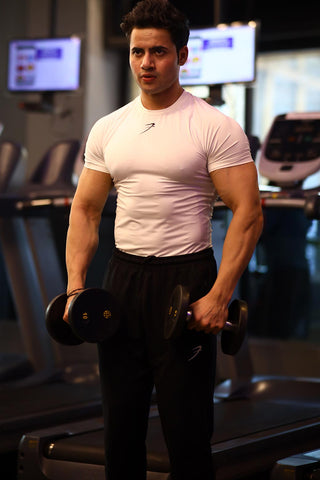
- Breathable, Sweat-Wicking T-Shirts: Gym t-shirts with moisture-wicking fabric keep you dry during intense pressing sessions.
- Stretchable Gym Wear: Stringers and tank tops offer maximum shoulder mobility and free movement without fabric bunching.
- Lightweight Training Outfits: Training shorts that wick sweat ensure comfort from head to toe.
- Athleisure Wear: Quality athleisure wear lets you transition from workout to errands seamlessly.

Frequently Asked Questions
1. What does the incline dumbbell press target?
The incline dumbbell press mainly targets the upper chest (clavicular pectoralis major). In addition, the front delts and triceps can also benefit.
2. Is the incline dumbbell press better than the flat bench press?
When comparing the incline dumbbell press vs flat bench press, both have their own benefits. The incline dumbbell press is better at activating the upper chest, promoting muscle development and shaping. On the contrary, the flat bench press emphasises the lower chest. It would be best if you incorporated both of them into your workouts to ensure all areas receive sufficient stimulation.
3. What angle is best for the incline dumbbell press?
It is recommended that the incline dumbbell press angle be set to 30°-45° for the most effective workout of the upper chest. Bench angles higher than this put more stress on the shoulders.
4. Can beginners do the incline dumbbell press?
Yes. The inclined dumbbell press for beginners is one of the best ways to develop strong, durable upper-body muscles. However, start with light weights and do about 3 sets of 10-12 reps.
5. How often should I include the incline dumbbell press in workouts?
It is advisable to perform the incline dumbbell press 1-2 times per week as part of a chest or upper-body workout program.
Popular Searches
Sleeveless Compression Shirt | Grey Compression Full Sleeve T Shirt | Gym Kit For Men | Gym Tank Tops For Men |Top Gym Accessories | Gym Cap Men | Oversized Gym Clothes | Best Men Track Pant For Gym
Popular Blogs
Gym Compression Wear For Better Performance, Recovery And Training | Gym or Home Workout: Which Is Better for Muscle Gain & Strength? | Sweatshirt Outfits for Men: 10+ Ways to Style Sweatshirts Easily | Top Stylish Gym Clothes For Men - Guide On How To Build A Gym Wear Wardrobe | Cardio vs Strength Training for Weight Loss - Effective Fat Burning Workouts | 4 Indoor Home Workouts During Air Pollution - Exercise at Home Safely
